Cybersecurity in Europe: a strategic priority in the face of new threats
In recent years, the proliferation of geopolitical tensions and international conflicts has been accompanied by a growing hybridization of threats, which now fully extends to cyberspace. A grey zone by nature, ambiguous and difficult to attribute, the cyber domain offers a fertile breeding ground for the proliferation of malicious actors with varied intentions. Sabotage, cyberattacks, foreign interference campaigns… In the all-digital age, critical infrastructures, information networks and digital spaces have become veritable invisible battlefields. According to UNICC figures, malicious activity in cyberspace worldwide increased by 35% in 2024 compared to the previous year. Making cyber resilience a priority for international cooperation and solidarity is now an imperative.
While cybersecurity focuses on protecting systems and data, cyber resilience goes further. It encompasses the ability of organisations and societies as a whole to anticipate, absorb, overcome and adapt to cyber incidents. In essence, it is therefore based on a collective approach. It is with this in mind that Expertise France has broadened its scope of action to adopt a global vision of cyber resilience, inspired by the collective mechanisms at work in the fight against climate change. By mobilising French and European expertise, our agency is strengthening digital solidarity, because for Europe, investing in cyber solidarity also means neutralising threats before they reach its borders. As part of the Global Gateway strategy, the European Union thus intends to build trusted, resilient digital ecosystems based on shared values.
An edition in partnership with HAUS, a key player in institutional strengthening
On 4 February 2026, a few weeks before the AI Impact Summit in New Delhi, Expertise France joined forces with HAUS (Finnish Institute of Public Management) to devote a new edition of Rendez-vous de l’Expertise to the role of international cooperation in strengthening cyber resilience. Hosted by journalist Gallagher Fenwick, the programme gave a voice to experts and practitioners who are committed on a daily basis to building trusted and resilient digital environments.
This edition notably highlighted the programme Connectivity for Central Asia (C4CA) signed Global Gateway, an example of cooperation in the Team Europe format. Led jointly by HAUS (Finland), Latvia, Lithuania, Estonia and Expertise France, this project aims to secure satellite connectivity in the five Central Asian countries. In support of this investment programme, the European Commission has entrusted Expertise France with setting up a consortium that goes far beyond ‘hard’ connectivity alone. The partnership with HAUS is crucial in this regard: based on the Finnish model of public administration and digital governance, it aims to provide local administrations with the institutional capacities necessary to support digital transformation and meet contemporary cybersecurity challenges.
Protecting critical infrastructure and building cyber-resilient societies
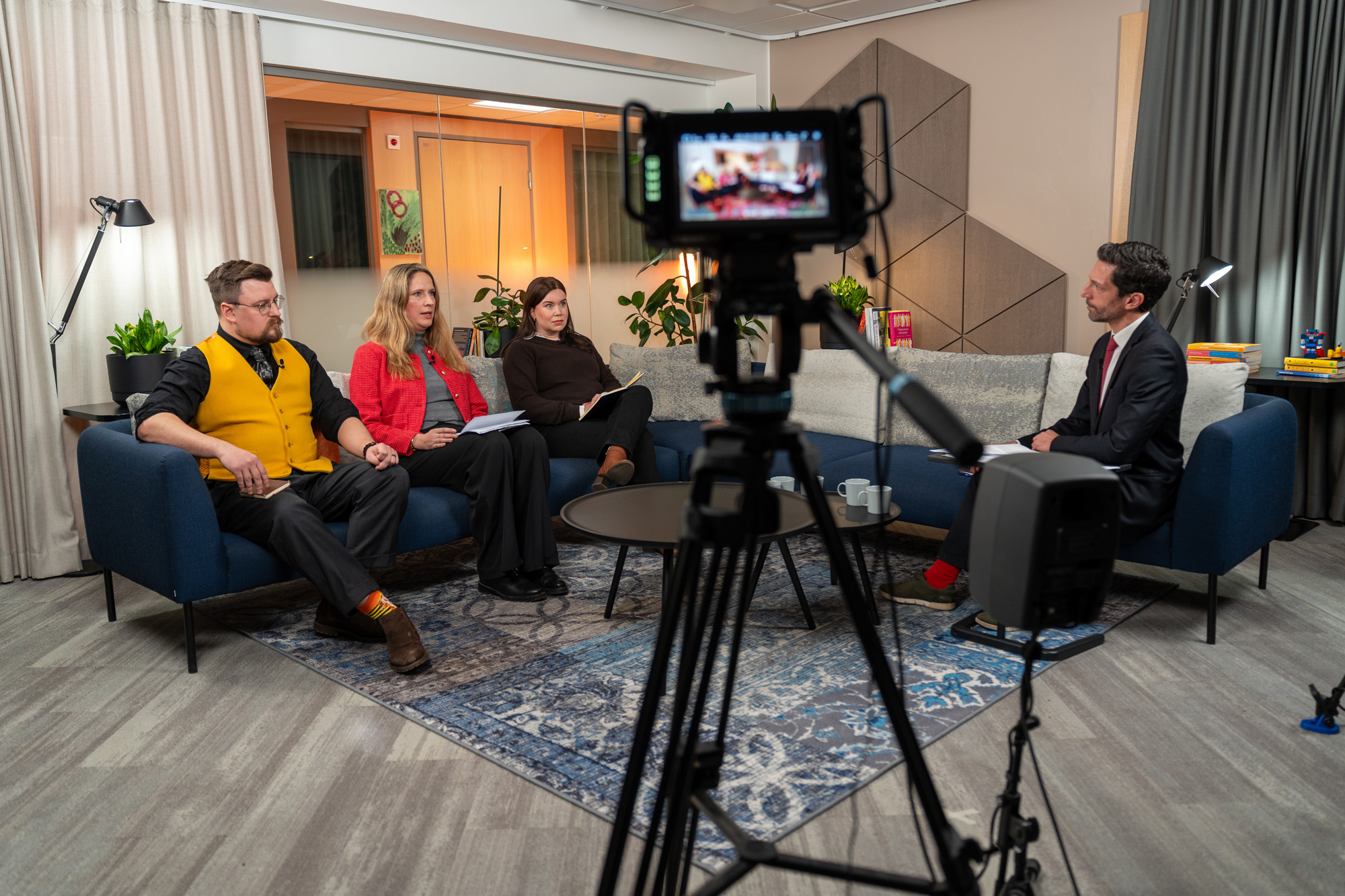
A first round table brought together four experts to discuss the issue of cybersecurity of critical infrastructure. Among the participants, Jean-Marie Chenou, cybersecurity expert at Expertise France, reiterated the importance of political dialogue and bi-regional cooperation, particularly within the framework of the EU-Latin America and Caribbean Digital Alliance (EU-LAC). Continuing this idea, Maxime Lebrun, a researcher at the European Centre of Excellence for Countering Hybrid Threats, emphasised the need for ‘harmonisation of legislation’ within the European Union, which he described as an essential condition for Member States to “share the same security standards and collectively strengthen the Union’s resilience .” Taking a more operational approach, Jaakko Wallenius, Vice-President of Resilience and Defence at Elisa, and Dr Anssi Kärkkäinen, Director General of Finland’s National Cyber Security Centre (Traficom), reiterated the need to develop a common digital culture and a national strategy for anticipating threats based on information.
A second round table explored the conditions necessary for the emergence of cyber-resilient societies, placing citizens at the heart of digital strategies. Kristel-Amelie Aimre, advisor on digital diplomacy and cyber diplomacy at the Estonian Ministry of Foreign Affairs, honoured us by sharing the lessons learned from the cyber attack that hit the Estonian government in 2007.
Also around the table were Denis Boyer, Risk Awareness Officer at cybermalveillance.gouv.fr, Markus Holmgren, Associate Researcher at the Finnish Institute of International Affairs (FIIA), and Marianne Lindroth, Project Manager at Cyber Citizen Initiative, discussed the levers for building inclusive resilience: transparency towards citizens, strengthening public-private partnerships, and designing solutions that are accessible to all.
“Resilience is not born of regulatory documents, but of coordination, the sharing of best practices and the desire to make these approaches concrete and understandable to everyone.” Marianne Lindroth, Project Manager, Cyber Citizen Initiative